
Prof. Dr. Volker Lilienthal
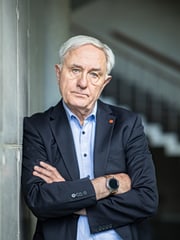
Photo: UUH-Esfandiari-2025
Professor of Journalism and Communication Studies (retired), former Rudolf Augstein Endowed Professorship for the Practice of Quality Journalism
Address
Contact
Areas of Focus
- From 2009 to 2025, Volker Lilienthal held the Rudolf Augstein Endowed Professorship for the Practice of Quality Journalism.
- His teaching focused on journalistic research and the development of media products in project-based workshops, largely conducted in cooperation with media partners.
- His research has been and continues to be dedicated to investigative and digital journalism. His academic interests also include media ethics and media criticism.
- Another key area of focus was advanced investigative research as well as issues of cybersecurity in media organizations. A research project in this area is still ongoing.
- He has always sought to “identify potentials in journalism and foster them through research and teaching.” Volker Lilienthal summarized this fundamental approach to his work as a university professor in a farewell interview with his colleague Michael Brüggemann.
Profile
Volker Lilienthal holds a degree in journalism and had established a strong reputation as a specialist media journalist prior to his appointment at the University of Hamburg. For twenty years, he worked as an editor for the renowned professional publication epd medien, most recently as editor-in-chief. During this period, he published several investigative reports and conducted research into the history of the Evangelical Press Service during the Nazi era. The high point of this work was the exposure of the so-called Marienhof scandal in 2005. Lilienthal received multiple awards for his journalistic achievements.
In 2006, the Rudolf Augstein Foundation enabled the University of Hamburg to establish an endowed professorship with a budget of one million euros for a five-year period. This marked the first endowed professorship ever dedicated exclusively to journalism. Following a regular appointment procedure, Volker Lilienthal was appointed in early 2009 and took up his position in the winter semester of 2009/10, holding the Rudolf Augstein Endowed Professorship for the Practice of Quality Journalism.
Over the subsequent sixteen years, he consistently advocated the concept of “professionalization through scholarship” (Kurt Koszyk). His teaching aimed to equip students with a competent, research-based understanding of journalism as a profession serving the public interest. Scholarly methods and findings—particularly from audience research—were frequently incorporated. Lilienthal placed particular emphasis on structured investigative methods and ethically responsible professional practice.
In his research, he focused on structural transformations such as digital journalism and, in this context, on specific journalistic innovations, including Correctiv, while also maintaining a critical perspective. Notably, in 2000 he became the first journalism scholar to conduct an in-depth observational study of the editorial offices of BILD, interviewing 43 journalistic staff members.
According to another guiding principle of Lilienthal’s work, journalism research should benefit not only scholars and the academic community but also those being studied. This objective underpinned a research project scheduled for completion in 2026 on digital security and source protection in sensitive investigative reporting. As part of the project, more than 230 female journalists received training in security techniques. Additional project components contributed to sustained knowledge transfer into journalistic practice.
In teaching, Lilienthal consistently sought cooperation with newsrooms, enabling students of Journalism and Communication Studies to develop journalistic products—ideally with prospects for actual publication. One example is a special supplement on European policy produced for Der Tagesspiegel during the winter semester of 2019/20. On a smaller scale, journalists from media outlets such as Hamburger Abendblatt, Der Spiegel, NDR, and DIE ZEIT regularly contributed to seminars, providing practice-oriented training for UHH master’s students. In cooperation with the Hamburg community broadcaster TIDE, students also produced content for radio and television.
A particularly sustained collaboration developed with the Netzwerk Recherche. Under Lilienthal’s supervision, students produced a conference newspaper for the annual NR conference in Hamburg for ten consecutive years. Seminar participants met prominent figures such as New York Times journalist Anton Troianovskiy and ARD correspondent Sophie von der Tann, and also attended the conference itself, including numerous educational workshops.
Equally long-term was the cooperation with the Otto Brenner Foundation. Since 2013, selected students have annually participated in the preselection of more than 500 submissions for the Otto Brenner Prize as part of an extracurricular project. This prestigious journalism award was also the focus of a project-based workshop within the curriculum during the winter semester of 2024/25. The award-winning works of 2024 were analyzed as exemplars of quality journalism, and the production processes behind the prize-winning articles, films, radio features, web specials, and podcasts were reconstructed through interviews with their creators. The foundation published the results of this project on its website.
In 2012, Lilienthal brought the renowned journal Message – International Journal of Journalism, founded in 1999 by Prof. Dr. Michael Haller (University of Leipzig), to the University of Hamburg, where a new editorial team was established. Members of the editorial staff were given opportunities to pursue doctoral studies, supported by the Hans Böckler Foundation. The overall project was made possible by funding from the Hamburg | Schleswig-Holstein Media Foundation. Unfortunately, the journal ceased its print publication in 2014 due to insufficient subscription revenues and the absence of follow-up funding.
Nevertheless, "Message" continued to be published online via its own website, which was also frequently used as a training platform for students. For many years, the editor was Malte Werner, a doctoral candidate supervised by Volker Lilienthal. The website content produced over the years at message-online.com is now hosted by the University of Hamburg’s Center for Sustainable Research Data Management. In addition, a digital repository has been established for all print issues of the quarterly journal published since 1999, in cooperation with the DFG-funded project media/rep/ at the University of Marburg.
The public lecture series organized by Volker Lilienthal also attracted considerable participation and attention. Notable examples include the winter semester 2016/17 lecture series on “Lügenpresse” as a political polemic (co-organized with Prof. Dr. Irene Neverla), and the lecture series held in the winter semester of 2023/24 to mark the 100th birthday of Rudolf Augstein, the namesake of the professorship, titled “Sagen, was ist” (“To Say What Is”).
- Recordings of all lectures from the “Lügenpresse” series remain available via the University of Hamburg’s video portal, Lecture2Go.
- The lecture series featuring three Augstein Lectures by prominent speakers was financially supported by the Rudolf Augstein Foundation and recorded by the community broadcaster TIDE; the videos are available on YouTube.
- The lectures from both series were also published in revised form as books by Kiepenheuer & Witsch (2017) and Herbert von Halem (2024).
Within the academic self-governance of the Department of Social Sciences, Professor Lilienthal served as Program Director of the Field of Journalism and Communication Studies and twice as Department Speaker, most recently from 2020 to 2025.In addition, from 2016 to 2024 he served as Chair of ProJournal e.V., the association of friends and supporters of Journalism and Communication Studies at the University of Hamburg.
CV
Volker Lilienthal, born in 1959 in Minden, Westphalia, served as managing editor of the professional media service epd medien in Frankfurt am Main until his appointment to the University of Hamburg in 2009. During the winter semester of 2007/08, he had already served as acting holder of the Rudolf Augstein Endowed Professorship for the Practice of Quality Journalism.
He completed his studies in journalism at the University of Dortmund in 1983, graduating as a Diplom-Journalist under the supervision of Prof. Dr. Kurt Koszyk. This was followed by studies in modern German literature at the University of Siegen, where he earned his doctorate in 1987 under Prof. Dr. Helmut Kreuzer. His doctoral dissertation, entitled “Literary Criticism as Political Reading,” examined the media reception of Peter Weiss’s novel trilogy The Aesthetics of Resistance.
Lilienthal joined the Evangelical Press Service (Evangelischer Pressedienst, epd) as an editor in 1989, became deputy head of department in 1997, and was appointed managing editor of epd medien in January 2005. Throughout his more than twenty years as a specialist media journalist, he also published scholarly work and held teaching appointments at the universities of Frankfurt am Main and Siegen.
Since 2005, Lilienthal has served as a juror for the Otto Brenner Prize for Critical Journalism and was co-editor of the International Journal of Journalism MESSAGE from 2012 to 2014.
In 2019, he was elected as an independent expert to the Administrative Board of Deutschlandradio and was confirmed for a second five-year term in 2024.
Publications
(Selected recent publications)
“A Year of Chaos”: The Trimedia Diversification of BILD (2020–2023). A case study on the failure of innovation, Medien & Kommunikationswissenschaft, 2025, no. 4, pp. 505–529.
What Reputation and What Effects Does the Otto Brenner Prize Have? A survey of award recipients and fellows over twenty years, in: Dossier: 20 Years of the Otto Brenner Prize – 20 Years of Critical Journalism, Otto Brenner Foundation, 2025.
First Be Safe: Exploring and Improving Journalists’ Skills in Digital Security (with J. Frech, V. Schönbächler), Journalism, Special Edition, 2024.
“To Say What Is”: Journalism for an Open Society – Rudolf Augstein on the Occasion of His 100th Birthday (ed.), Cologne: Herbert von Halem, 2024.
Media Ethics at BILD: A Survey, a Content Analysis, and a Bibliography of Research on BILD (1967–2022), Munich/Eichstätt: zem::dg studies, 2023.
The So-Called False Appearance: Friendships and Enmities in Academic Appointment Procedures, in: Walter Hömberg (ed.), Marginalistik. Almanac for Friends of Joyful Scholarship, Vol. II, Munich: Allitera, 2023, pp. 88–101.
Best of Enemies: BILD and Public Broadcasting, epd medien, 2023, no. 16, pp. 3–8.
A Systemic Problem: Lucrative Government Contracts for Journalists, epd medien, 2023, no. 11, pp. 3–6.
“You Suck It Up and You Deal with It”: Blind Spots in Investigative Reporting and How to Overcome Them (with J. Kunert, M. Brüggemann, J. Frech, W. Loosen), Journalism, 2022.
Respect, Folklore, Critique: Church and Faith in the Tabloid Newspaper BILD, Communicatio Socialis, 2022, no. 4, pp. 543–554.
The Otto Brenner Prize for Critical Journalism, in: Otto Brenner Foundation (ed.), 50 Years of the Otto Brenner Foundation, Frankfurt, 2022, pp. 137–175.
The Godless BILD? Representations of Religion in the Tabloid Press, in: Susanna Endres, Christian Gürtler, Irena Pavolivić (eds.), Seeing the Hidden: The Search for Meaning Between Media, Ethics, and Religion. Festschrift on the Occasion of the Retirement of Prof. Johanna Haberer, Erlangen, 2022, pp. 301–322.
Journalism Goes to School – A Model for Greater Media Literacy?, merz | Medien + Erziehung, 2022, no. 3, pp. 78–84.
How Investigative Journalists Around the World Adopt Innovative Digital Practices (with J. Kunert, J. Frech, M. Brüggemann, W. Loosen), Journalism Studies, 2022, pp. 761–780.
Right-Wing Populism as a Challenge for the Media: The AfD’s Media Criticism and Journalistic Responses to the Party, in: Petra Grimm, Oliver Zöllner (eds.), Digitalization and Democracy: Ethical Perspectives, Media Ethics, Vol. 18, Stuttgart: Franz Steiner, 2020, pp. 37–51.
“Lying Press” (Lügenpresse): Anatomy of a Political Polemic (ed., with Irene Neverla), Cologne: Kiepenheuer & Witsch, 2017.
Research
Health Journalism
From 2009 to 2014, the first Augstein team (Dennis Reineck, Thomas Schnedler, and Volker Lilienthal) addressed the quality and societal role of health journalism in three smaller sub-projects.
The project began in 2009 with a conference that analyzed, among other topics, the invasive public relations strategies of the pharmaceutical industry and their implications for journalism.
In 2011, commissioned by a major German publishing house, the team examined the quality of health reporting in selected newspapers published by the company. Subsequently, additional German daily newspapers were included in the analysis. This expert report remains unpublished.
Thirdly, in 2014 the Augstein team published a comprehensive edited volume on quality in health journalism. For this book, published by Springer VS, both communication scholars and specialist journalists were recruited as contributors. This editorial decision also reflects a core working principle of the Rudolf Augstein Endowed Professorship for the Practice of Quality Journalism: to connect academic research and journalistic practice.
Digital Journalism
In 2012, the Rudolf Augstein Endowed Professorship launched a major research project on the then-emerging field of digital journalism and its potential to enhance audience participation, a project that continued until 2014.
The highly optimistic conclusions drawn at the time on the basis of empirical research (content analysis, network analysis, and surveys)—particularly with regard to impulses for democratic society—would not necessarily be repeated today in light of hate speech and other problematic developments in internet-based communication, Professor Lilienthal notes in retrospect.
The research project was led jointly by Volker Lilienthal and Stephan Weichert, who at the time was Professor at Macromedia University. Other project members included Annika Sehl (now Professor at the Catholic University of Eichstätt-Ingolstadt), Dennis Reineck, and Silvia Worm.
The project was commissioned by the State Media Authority of North Rhine–Westphalia. The final report, published as a book by VISTAS under the title Digital Journalism: Dynamics – Participation – Technology, is available as a PDF from the LfM.
Correctiv – A New Type of Investigative Reporting Organization
In 2016, Volker Lilienthal conducted an individual research project on Correctiv, a newsroom founded two years earlier that was dedicated to investigative journalism and operated in cooperation with established media outlets.
Lilienthal was the first scholar to examine the potentials and developmental challenges of this journalistic start-up. He observed the editorial team in Berlin, interviewed Correctiv journalists, and published his findings in Medien & Kommunikationswissenschaft.
International Investigative Journalism
In 2019, the world’s most important conference on investigative journalism was held in Germany for the first time—and notably in Hamburg. The Global Investigative Journalism Conference (GIJC) brought together 1,700 journalists from 130 countries.
Together with several colleagues whom he was able to engage in the project, Professor Lilienthal seized this opportunity to initiate what might be described as local field research with an international perspective. Conference participants were surveyed on site about their working practices, security techniques, and “blind spots” in their perception of professional challenges.
This research resulted in two publications:
- J. Kunert, M. Brüggemann, J. Frech, V. Lilienthal, W. Loosen: “You suck it up and you deal with it”: Blind spots in investigative reporting and how to overcome them, Journalism, 2022, DOI: doi.org/10.1177/14648849221146929
- J. Kunert, J. Frech, M. Brüggemann, V. Lilienthal, W. Loosen: How Investigative Journalists Around the World Adopt Innovative Digital Practices, Journalism Studies, 2022, pp. 761–780, DOI: doi.org/10.1080/1461670X.2022.2033636
The Tabloid Newspaper BILD – Rudimentary Media Ethics and Trimedia Transformation
Since 2019, Professor Lilienthal has engaged intensively with BILD. While the tabloid newspaper had long been a prominent object of communication research, previous studies had almost exclusively relied on content analyses conducted at a distance, without access to the newsroom itself. Yet a key question remained: how is tabloid journalism—so frequently subject to criticism—actually produced?
Lilienthal sought to close this research gap by exploring the internal dynamics of the newsroom. In 2019, he received permission from then Editor-in-Chief Julian Reichelt to observe the editorial staff in Berlin and to interview employees. Based on 43 in-depth interviews, a data corpus comprising 1,022 pages was compiled.
To date, the following four publications have emerged from the BILD project:
- Self-Regulation in Tabloid Journalism, Communicatio Socialis, 2022, No. 2, pp. 247–263.
- Respect, Folklore, Critique: Church and Faith in the Tabloid Newspaper BILD, Communicatio Socialis, 2022, No. 4, pp. 543–554.
- Media Ethics at BILD: A Survey, a Content Analysis, and a Bibliography of Research on BILD (1967–2022), Center for Media and Digital Society Ethics (zem::dg), Munich/Eichstätt 2023 (zem::dg studies 3).
- “A Year of Chaos: The Trimedia Diversification of BILD (2020–2023)", Medien & Kommunikationswissenschaft, 2025, No. 4, pp. 505–529.
Sensitive Investigations and Source Protection
In 2022, the Rudolf Augstein Endowed Professorship launched its final major research project: Sensitive Investigations and Source Protection: Digital Security of Journalists and Their Informants. In an interview for the University of Hamburg website, Professor Lilienthal outlined the project’s objectives.
The project addresses the growing threats to journalistic work posed by digital surveillance and cyberattacks on media organizations. Its central focus is source protection and the question of how the identities of informants can be safeguarded in digital environments. In this context, the project examines problem awareness and practical competencies among journalists, IT managers, and editors-in-chief.
Closely linked to this research agenda is a practical training component. In 21 media organizations, specialized trainers Annkathrin Weis and Daniel Moßbrucker conducted digital security training sessions, which were scientifically observed by the project team consisting of Frech, Schönbächler, and Lilienthal. In addition, two workshops were organized for freelance journalists. Daniel Moßbrucker completed his doctorate under Professor Lilienthal in 2025 with a dissertation entitled Journalism in a Society of Ubiquitous Surveillance.
Further efforts to promote knowledge transfer included workshops at journalism conferences, where research findings were also presented. This approach again reflects the enduring commitment of the Rudolf Augstein Endowed Professorship to integrating theory and practice.
The project is funded by the Federal Government Commissioner for Culture and the Media (BKM); at the project’s launch in 2022, this office was held by State Minister Claudia Roth. The project is scheduled for completion in 2026. Publications to date include:
- J. Frech, V. Lilienthal, V. Schönbächler: First Be Safe: Exploring and Improving Journalists’ Skills in Digital Security, in: Journalism, Special Edition 2024.
- V. Lilienthal, V. Schönbächler, J. Frech: Journalistic Source Protection as a Concerted Effort: Media Ethics Standards in the Context of Cyberattacks and Ubiquitous Surveillance, Communicatio Socialis, 2026, No. 1: Security and Information (forthcoming).
Team
The Rudolf Augstein Endowed Professorship at the University of Hamburg included the following staff members (listed in reverse chronological order):
- Jannis Frech, M.A.
- Dr. Viviane Schönbächler
- Florian Hohmann, M.A.
- Natascha Buhl, Diplom-Journalistin
- Dr. Dennis Reineck
- Dr. Thomas Schnedler
- Dr. Eva Boller
- Malte Werner, M.A.
Secretarial support was provided by:
- Kirsten Cassau
- Corinna Ohlmeier
Awards
- 2006: Leipzig Prize for the Freedom and Future of the Media
- 2005: Journalist of the Year (Reporter des Jahres)
- 2005: Specialist Journalist of the Year (Fachjournalist des Jahres)
- 2005: Bert Donnepp Prize for Media Journalism
- 2004: Netzwerk Recherche “Lighthouse Award” for Outstanding Journalistic Achievement
- 2004: Second Prize for Best Scholarly Journal Article, German Communication Association (DGPuK)