
Journalism and Communication Studies
Welcome to the Journalism and Communication Studies (JKW) webpages! Here you’ll find, among other things, information about our degree programs, our professors, and their projects. Enjoy browsing!

Content
News from JKW - Journalism and Communication Studies

- 1 June 2026|Digital Journalism
The I-JAI project welcomes Anne Schmitz as a new postdoctoral researcher
Anne Schmitz joins the project Isomorphism through AI? Exploring Journalistic AI via Industry Awards (I-JAI).
Dr. Anne Schmitz started as a postdoctoral researcher in the DFG-funded research project Isomorphism through AI? Exploring...

Photo: ICA-Logo Kapstadt 2026
27 May 2026|Wissenschaft und ForschungTeam Kleinen-von Königslöw auf der 76. Jahrestagung der ICA in Kapstadt, Südafrika
Vom 4. bis zum 8. Juni 2026 findet in der Hauptstadt Südafrikas die jährliche Tagung der International Communication Association statt. Zwei Mitarbeiter:innen aus dem Team stellen hier ihre aktuelle Forschung in drei Vorträgen vor.
- 1 May 2026|Digital Journalism
The PSS4DEMOCRACY project welcomes Liändrie Steffens as a new research associate
As of May 1, 2026, Liändrie Steffens joins the project Public Spheres for Democracy (PSS4DEMOCRACY) as a research associate and PhD candidate.
She holds a Bachelor’s degree in International Relations from Stellenbosch University and a...
Photo: Pixabay/viarami-cropped
27 April 2026|PublikationArtikel zu Verifikationsverhaltens in der generativen Suche veröffentlicht
In der Zeitschrift Computers in Human Behavior Reports ist der Artikel „Determinants of verification behavior in generative search: evidence from a conjoint experiment“ erschienen. Die Studie von Eva Knor (mit Michael V. Reiss, Judith Möller und Lisa Merten) zeigt auf Basis eines vorregistrierten Conjoint-Experiments (N =...
Photo: UHH/Knor
24 April 2026|Wissenschaft und ForschungInternationale Konferenz in Kopenhagen: Controversies of AI Societies 2026
E. Knor auf der internationalen Konferenz Controversies of AI Societies 2026 (Kopenhagen)
Photo: DGPuK - Logo Jahrestagung 2026
11 March 2026|Wissenschaft und ForschungTeam Kleinen-von Königslöw auf der DGPuK 2026
Auf der Jahrestagung der DGPuK in Dortmund stellen die Mitarbeitenden des Teams von Prof. Kleinen-von Königslöw ihre aktuelle Forschung vor.
Photo: UHH/Krüger
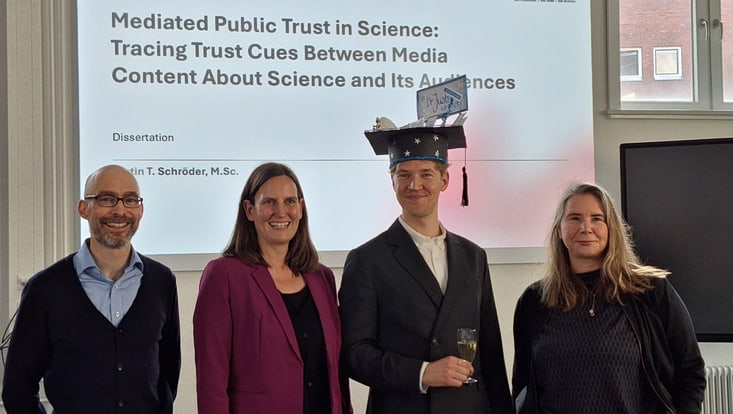
27 February 2026|Wissenschaft und ForschungJustin Schröder verteidigt seine Dissertation
Am 26. Februar 2026 verteidigte der ehemalige JKW-Mitarbeiter Justin Schröder erfolgreich seine Dissertation mit dem Titel „Mediated Public Trust in Science: Tracinng Trust Cues Between Media Content About Science and Its Audiences“ im Bereich der JKW an der Universität Hamburg.
Herzliche Gratulation!
Die Dissertation...


Academic studies (JKW)
You may choose between the following degree programs:
Research Projects (JKW)
Here we present selected ongoing research projects at the JKW. For additional projects as well as the research focuses of the individual professorships please refer to their respective websites, linked below.
Professorships within JKW (Journalism and Communication Studies)
Prof. Dr. Michael Brüggemann (current programme director JKW)
Prof. Dr. Volker Lilienthal (2009 - 2025)
Prof. Dr. Irene Neverla (1992 - 2017)
Prof. Dr. Horst Pöttker (senior professor 2015 - 2018)
Prof. Dr. Dieter Roß (1990 - 2000) - 2022 deceased
Prof. Dr. Siegfried Weischenberg (2001 - 2014)
Prof. Dr. Hans-Jürgen Kleinsteuber (1990 - 2001) - 2012 deceased
About JKW
Here you will find a brief introduction, a chronological overview and several interviews in which professors from the Department of Journalism and Communication have spoken about the history of the department, the journalism degree program and their time at the university.
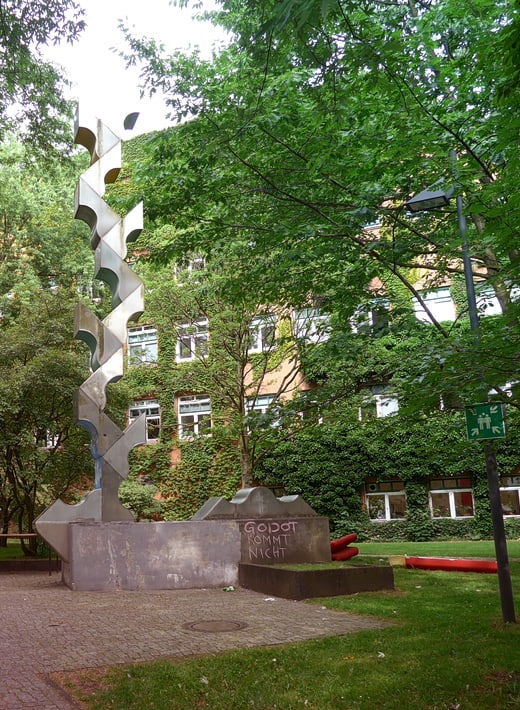
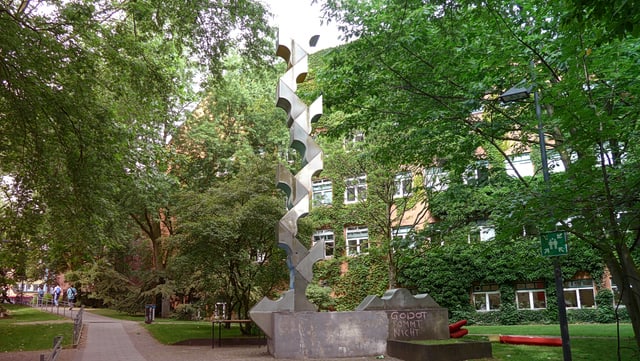
Photo: UHH/Krüger
Information for students and lecturers (JKW)
Examination Committee JKW - Journalism and Communication Studies, Universität Hamburg
Information for lecturers and students on dealing with absences (valid since 2018)
1. Mandatory attendance: The modules in the Master’s programme in Journalism and Communication Studies are based on the concept of a course of study guided by the teaching staff, which relies on students taking personal responsibility and on continuous, uninterrupted
learning (through reading, discussion, group work and practical exercises).
Active participation in as many course sessions as possible is therefore a fundamental requirement of the programme. Absences are only permitted for valid reasons. This also applies to lectures, as their content cannot be covered simply by reading a textbook. Nevertheless, according to the subject-specific regulations for the MA in Journalism and Communication Studies, Section 5(4), there is no formal compulsory attendance requirement for lectures.
2. Absences: As stipulated in Section 9(3) of the Faculty’s Master’s Examination Regulations, two absences (or 15% of the sessions) are acceptable. According to this provision, the lecturer decides whether further absences are permissible: he or she may agree with the absent student on a form of assessment designed to make up for the missed session. We recommend that all lecturers accept a third absence provided the missed session is made up for. From four absences onwards, the course should be repeated. Attendance is particularly important in the first seminar sessions for organisational reasons: anyone who does not email the lecturer to apologise before the session risks losing their place on the seminar in the event of overbooking.
3. Illness: Anyone who is ill (whether with a contagious or serious illness) should always stay at home to protect their own health and that of their fellow students and lecturers. Absences due to illness will be recorded.
4. Work placements: The course includes work placements totalling six weeks, which must generally be undertaken during the break between semesters (usually after the lecture periods of the 1st or 2nd semester). It is not possible to miss the first few weeks of a semester due to an ongoing work placement, as important decisions regarding the entire semester are made during the first two sessions in particular. As a number of editorial offices insist on placements lasting at least three months, we recommend that JKW lecturers facilitate such a placement during the summer semester break between the second and third semesters, from the beginning of July to the end of September.
The two sessions missed in July must be made up in a way that is pedagogically useful. Depending on the course, various solutions are possible, such as bringing forward or postponing the last two sessions for the entire seminar, or requiring individual preparatory work from the students concerned. If sessions are rescheduled for the entire seminar, this should, where possible, be noted in the seminar timetable so that students can make arrangements for the additional sessions (which are mandatory).
Contact person for students: Ihno Goldenstein; for lecturers: Michael Brüggemann
Anyone wishing to spend time studying abroad as part of their Master’s thesis can apply for funding from the university initiative HamburgGlobal.
Anyone who is generally interested in spending some time abroad will find plenty of useful information on the website of the International Office or the Erasmus+-programme.
Where do I find research material? Digital sources for journalism research and mass communication
There are many different sources you can use to find materials.
The state library’s (Staatsbibliothek) website is a good place to start: https://www.sub.uni-hamburg.de/startseite.html
You can search the library database at https://dbis.ur.de/SUBHH/browse/subjects/
The leading German language scholarly journals are:
Publizistik: https://link.springer.com/journal/11616 (access on the campus network; University members can also access externally)
Medien & Kommunikationswissenschaft (M & K): http://www.nomos-elibrary.de/index.php?genre=issue&issn=1615-634x&hl_s=date (access on the campus network; University members can also access externally)
Studies in Communication | Media (SCM): http://www.scm.nomos.de/ (freely accessible, articles in German and English)
Media Perspektiven: http://www.ard-werbung.de/media-perspektiven/ (freely accessible)
The leading English language journals for journalism studies:
(access on the campus network; University members can also access externally)
Journalism: https://uk.sagepub.com/en-gb/eur/journal/journalism
Journalism Studies: http://www.tandfonline.com/loi/rjos20
Journalism Practice: http://www.tandfonline.com/loi/rjop20
Journalism and Mass Communication Quarterly: http://jmq.sagepub.com/
Digital Journalism: https://www.tandfonline.com/loi/rdij20
The leading journals in mass communication studies (access on the campus network; University members can also access externally):
Journal of Communication: https://academic.oup.com/joc/issue
International Journal of Communication: http://ijoc.org/index.php/ijoc
Communication Research: http://crx.sagepub.com/
International Journal of Press and Politics: http://hij.sagepub.com/
Political Communication: http://www.tandfonline.com/loi/upcp20
European Journal of Communication: http://journals.sagepub.com/home/ejc
Other relevant journals and sources (access on the campus network or open access):
Feminist Media Studies: https://www.tandfonline.com/toc/rfms20/current
Games and Culture: http://journals.sagepub.com/home/gac/
Game Studies: http://www.gamestudies.org/
The leading journals in science and climate communication: (access on the campus network; University members can also access externally)
Science Communication: http://journals.sagepub.com/home/scx
Public Understanding of Science: http://journals.sagepub.com/home/pus
Journal of Science Communication (JCOM): https://jcom.sissa.it/
The leading interdisciplinary journals for sociological climate research: (access on the campus network; University members can also access externally)
Global Environmental Change (limited free access): https://www.sciencedirect.com/journal/global-environmental-change
Nature Climate Change: https://www.nature.com/nclimate/
Climatic Change: https://link.springer.com/journal/10584
To access these periodicals externally, you must go through the library website and log in with your library ID (title search at http://www.sub.uni-hamburg.de/recherche/elektronische-zeitschriftenbibliothek.html).
Important databases:
Communication and Mass Media Complete: https://dbis.ur.de/SUBHH/resources/4083
Web of Science: http://isiknowledge.com/wos
Wiso-Net: https://www.wiso-net.de/dosearch(contains press articles and eBooks as well as scholarly literature)
Lexis Nexis: https://dbis.ur.de/SUBHH/resources/1670 (print media archive, for example for searching for material on content analysis)
Factiva: https://dbis.ur.de/SUBHH/resources/4042
Google Scholar: https://scholar.google.de/
Helpful general information about the Business, Economics and Social Sciences Library:
“How can I find books or articles on my reading list in the library?” https://www.wiso.uni-hamburg.de/en/bibliothek/recherche/tipps.html
“How can I find eBooks?” https://www.wiso.uni-hamburg.de/en/bibliothek/recherche/e-publikationen/e-books.html
“How can I find textbooks?” https://www.wiso.uni-hamburg.de/en/bibliothek/recherche/tipps.html
“How can I find dissertations?” https://www.wiso.uni-hamburg.de/en/bibliothek/recherche/e-publikationen/e-dissertationen.html
“How can I find the most current information?” (including media content) https://www.wiso.uni-hamburg.de/en/bibliothek/recherche/tipps/recherchetipps/nachricht16-043-recherchetipp10.html
Extensive, up-to-date online encyclopedia of communication: https://onlinelibrary.wiley.com/
Possible examiners for theses in the
Master's degree programme in Journalism and Communication Studies
As a rule, professors of the department take over the supervision/
Initial review and research assistants the second review.
You can find a similar list which includes suggested topics for MA dissertations via this link: https://cloud.uni-hamburg.de/s/qT7kPGaoYExLoJf.
Professors
- Prof. Dr. Michael Brüggemann
- Prof. Dr. Katharina Kleinen-von Königslöw
- Prof. Dr. Juliane Lischka
- Prof. Dr. Judith Möller
- Dr. Matthias Revers
- Prof. Dr. Jannis Androutsopoulos (IMK; if willing and with a suitable topic)
- Professors of media and communication studies, political science and sociology - if willing and with a suitable topic
Emeriti
- Prof. Dr. Volker Lilienthal
- Prof. Dr. Uwe Hasebrink
- Prof. Dr. Irene Neverla
§17-Professors
- Prof. Dr. Wiebke Loosen
Research assistants (if willing and if the topic is suitable)
- Dr. Mike Farjam
- Eva Knor (as a secondary expert)
- Dr. Laura Liebig
- Hendrik Meyer (as a secondary expert)
- Dr. Monika Pater
- Louisa Pröschel (as a secondary expert)
- Dr. Anne Reif
- Lars Reinelt (as a secondary expert)
- Dr. Nadja Schaetz
- Dr. Tim Schatto Eckrodt
- Dr. Sascha Hölig (HBI, as a secondary expert)
- Dr. Cornelius Puschmann (HBI, (as a secondary expert)
- Dr. Jan-Hinrik Schmidt (HBI, (as a secondary expert)
- Dr. Hans-Ulrich Wagner (HBI, as a secondary expert)
Members of other universities or non-university research institutions
Professors of the universities where the bachelor's degree was completed, if they agree and have a suitable topic (as a second reviewer)
This is not exhaustive. Depending on the topic of the thesis, other examiners may also be considered.